
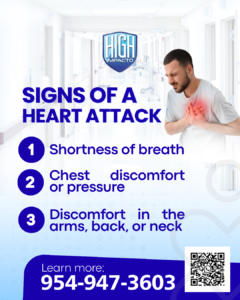
When a heart attack is suspected, acting quickly can make a difference. What you should do depends on whether the person remains conscious or becomes unresponsive.
If the Person Is Conscious
1. Recognize the Signs
Take symptoms seriously, including chest pressure or pain, difficulty breathing, dizziness, nausea, or discomfort that spreads to the arm, neck, jaw, back, or stomach.
2. Call 911
Request emergency medical assistance immediately. Do not wait for the symptoms to go away or drive the person to the hospital yourself.
3. Keep the Person at Rest
Help them stop their activity and rest in a comfortable position. Stay with them and monitor for any changes while emergency medical personnel are on the way.
If the Person Becomes Unresponsive
If the person becomes unresponsive and is not breathing normally or is only gasping, it may be cardiac arrest.
1. Call 911 or make sure someone else does.
2. Get an AED (Automated External Defibrillator) if one is available.
3. Begin CPR according to your level of training.
4. Use the AED when it becomes available and follow its instructions.
Continue providing care until emergency medical personnel arrive or the person shows signs of life.
Acting Quickly Can Make a Difference
Recognizing the signs, calling 911, and knowing how to respond in an emergency can help save a life.
Sources: American Red Cross and Centers for Disease Control and Prevention (CDC).